

Need to know how to defrost windshield fast? We’ve got you covered. This guide explains quick and safe methods, such as using ice scrapers, rubbing alcohol, and even salt water, on how to defrost windshield effectively. Read on to find out the best way to clear your windshield and get on the road quickly.
Key Takeaways
Use an ice scraper with even strokes from top to bottom for effective frost removal.
A rubbing alcohol solution can quickly defrost your windshield; mix equal parts alcohol and water in a spray bottle.
Utilize your car’s heater and defroster settings for efficient defogging; avoid air recirculation to let in drier outside air.
Use an Ice Scraper
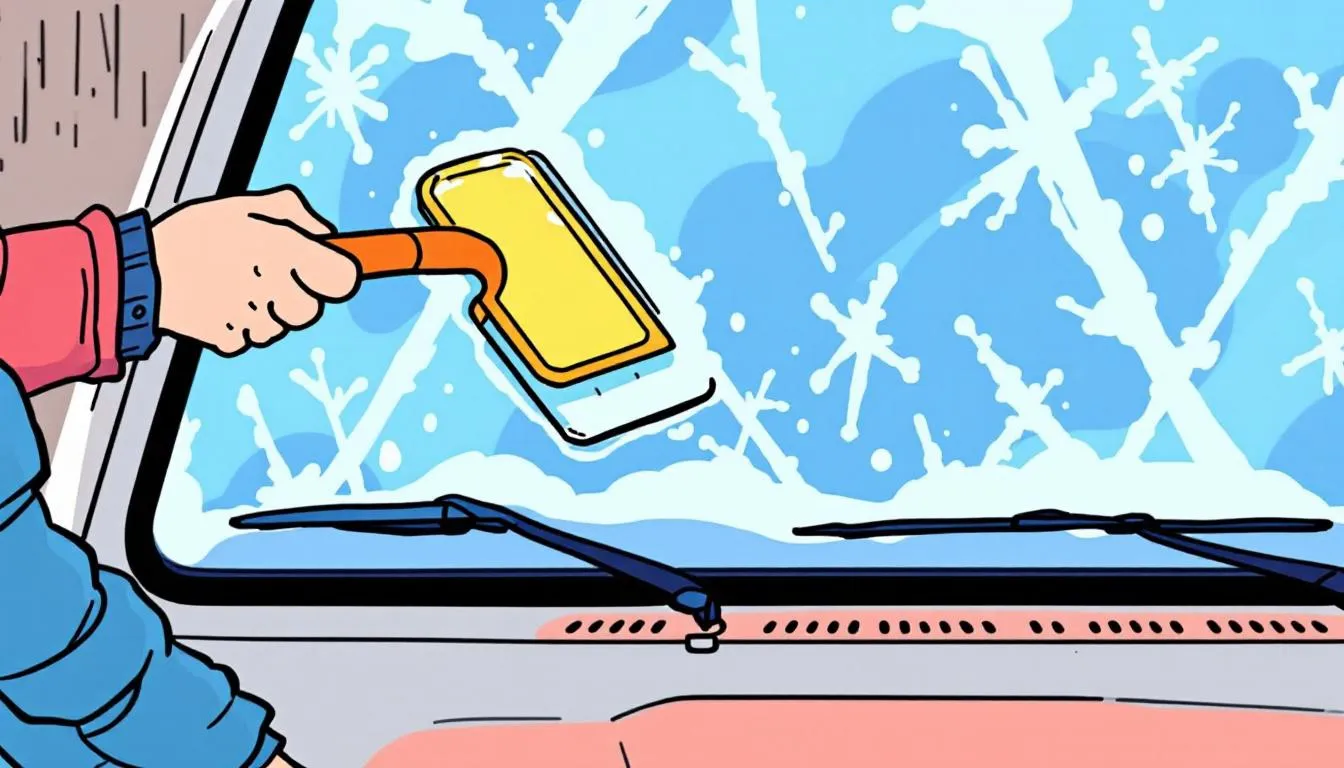
An ice scraper is the quintessential tool for battling frost and snow on your car windshield. It’s a simple and effective tool that every driver should keep handy during the colder months. We’ve found that getting the right technique down can make a world of difference in quickly defogging your windshield.
Wearing gloves while using an ice scraper not only keeps your hands warm but also provides a better grip, making the process more efficient. Start from the top of the windshield and work your way down, using firm, even strokes to remove moisture and the ice that has built up overnight. This method keeps your windows clean and clear, ensuring you have a safe line of sight with your windshield wipers.
Remember, the key to using an ice scraper effectively is consistent pressure and patience. Methodically working across the windshield ensures ice removal without scratching the glass or leaving streaks. Plus, it’s a workout for your arms—a bonus on those brisk winter mornings!
Apply Rubbing Alcohol Solution
For those looking for a chemical solution to the ice problem, a rubbing alcohol solution is a fantastic option. Rubbing alcohol helps to defrost your windshield by lowering the melting point of ice, making it easier to remove without the need for vigorous scraping.
To defrost your windshield quickly, follow these steps:
Mix equal parts of rubbing alcohol and water in a spray bottle to create the solution.
When ready, spray the solution onto the glass.
The alcohol works to melt the ice quickly, providing an almost immediate effect.
This method is particularly handy when you’re in a rush and need to quickly defog your windshield without delay.
One of the biggest advantages of using a rubbing alcohol solution is its effectiveness in a wide range of temperatures. It doesn’t just help with ice; it also serves as an anti-fog solution, ensuring your windshield remains clear even in humid conditions. Just a few sprays, and you’re good to go!
Use Salt Water Solution
Another household item that’s surprisingly effective at defrosting is salt water. Salt lowers the melting point of ice, which helps to melt the ice on the windshield with minimal effort. This method is simple, quick, and uses items you likely already have at home.
However, while salt water can be useful, it’s important to note that it may leave salt stains on your windshield. These stains can be a hassle to clean off later, so it’s something to keep in mind if you choose to use this method. Nevertheless, in a pinch, it’s a handy trick to have up your sleeve.
Warm Water Method
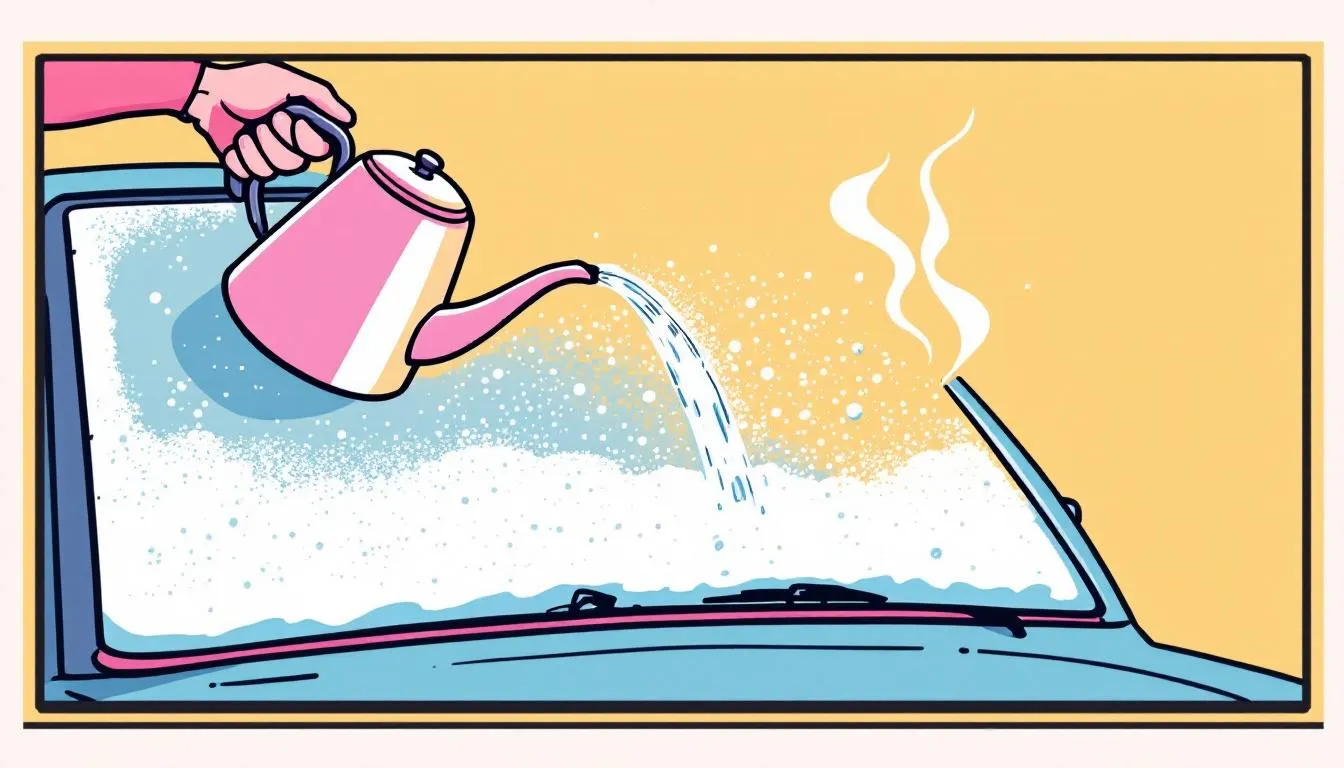
Using warm water can also be an effective way to defrost your windshield, but it comes with a crucial caveat: always use lukewarm water, never boiling or very hot water. Applying hot water to a cold windshield can cause the glass to crack or shatter due to the rapid temperature change. Lukewarm water, on the other hand, gently melts the frost without the risk of damage.
Pour lukewarm water over the windshield and watch the ice quickly melt away. This is one of the quickest way to defrost a windshield, especially on those mornings when you’re pressed for time.
Before applying any water, always check the condition of your windshield. Existing chips or cracking can increase the risk of further damage. If your windshield is in good condition, this method can be a lifesaver on particularly frosty days.
Utilize Your Car’s Heater and Defroster Settings
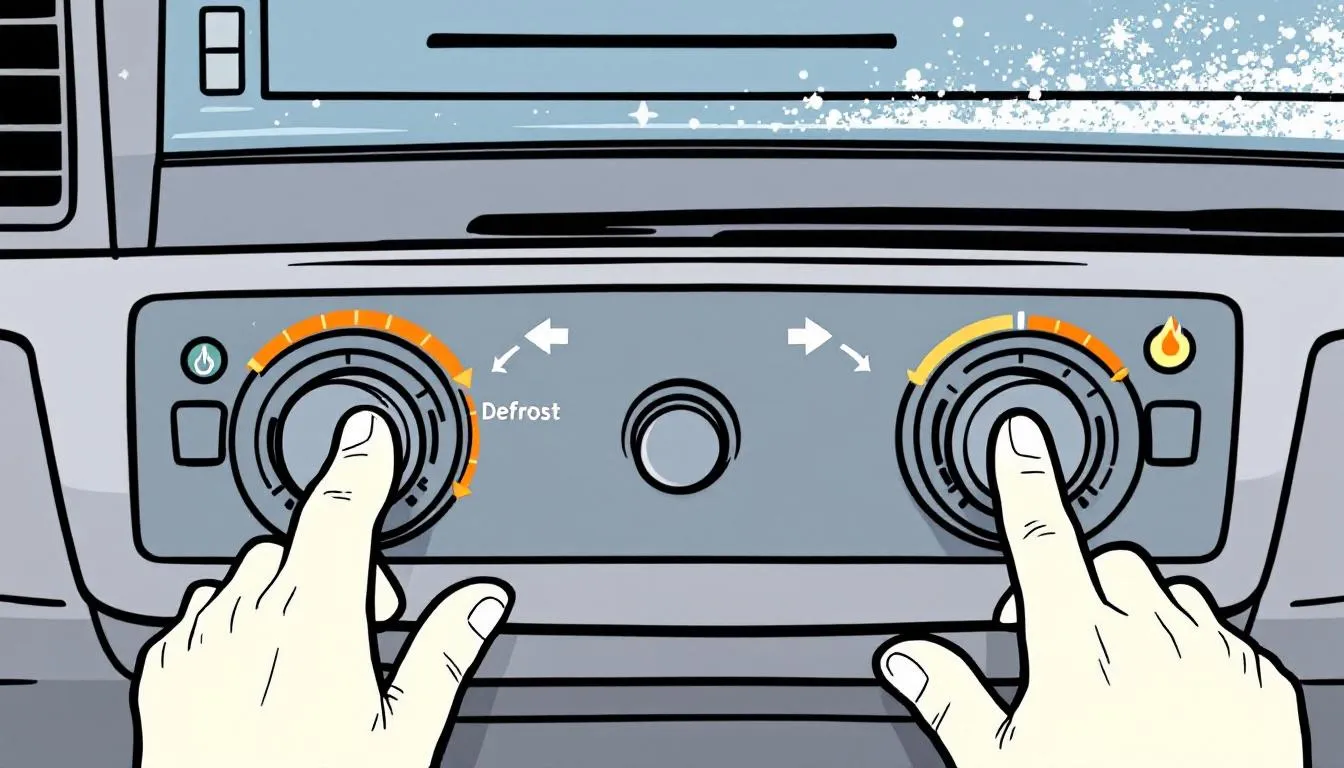
Most modern cars come equipped with built-in features designed to tackle foggy and frosty windshields. Start by setting your car’s heater to the highest setting to achieve optimal defrosting results. The heat will help melt the ice on your windshield, making it easier to clear most cars.
Activate the defroster immediately once frost or fog appears. The front defrosters blow warm air directly onto the windshield, effectively eliminating condensation. Rear defrosters utilize heating elements embedded in the glass to thaw ice or frost, providing a quick solution for the rear window as well.
Running the ac air conditioning while defrosting lowers humidity inside the car, preventing fog from forming on your windows. Additionally, make sure to turn off the recirculation button. This allows fresh, drier cold air from outside to enter the vehicle, which is crucial for quickly defogging your car windows and cooling the interior.
Preventing Frost and Fog on Windshields
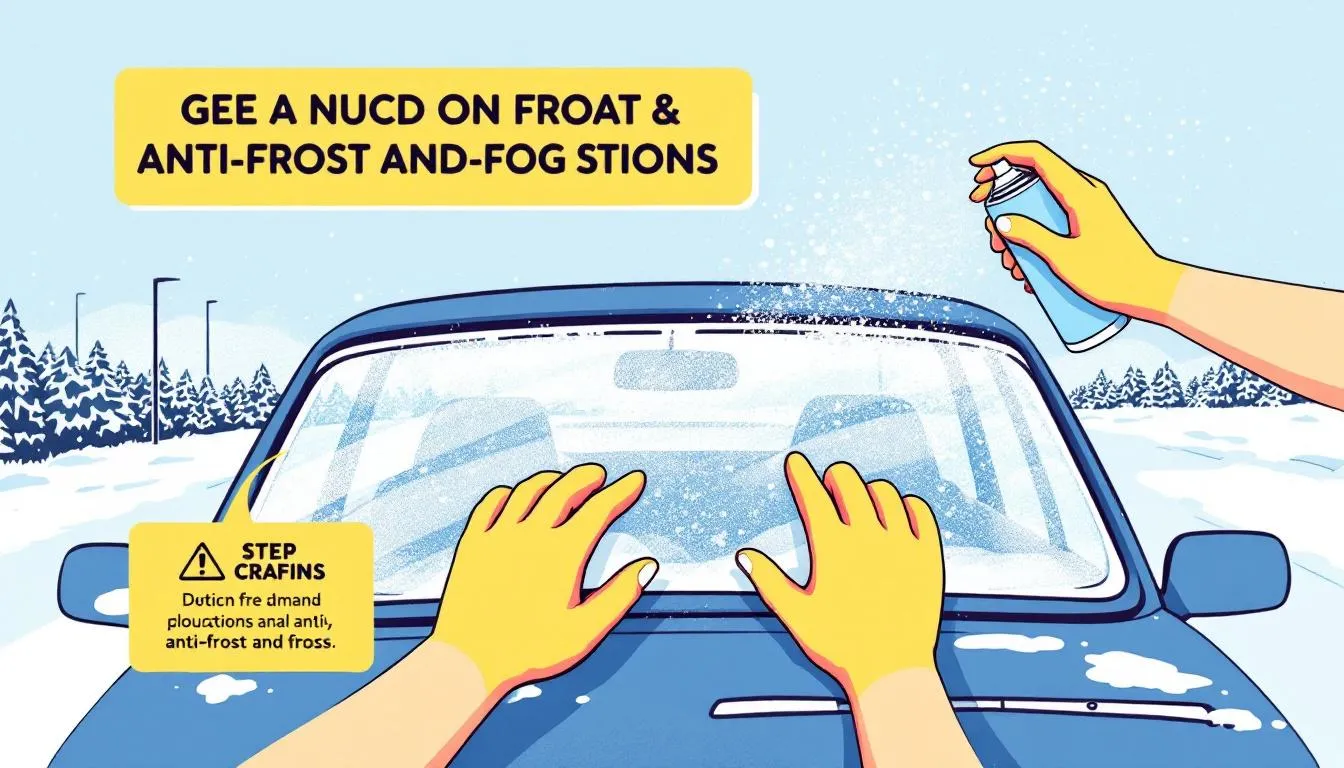
Preventing frost and fog on your car windows is always better than dealing with it afterward. Anti-fog solutions are specifically designed to prevent moisture from condensing on the windshield. These solutions can be purchased online or at local auto parts stores.
Another effective method is using a dehumidifier inside your car. Baking soda acts as a natural dehumidifier, helping to eliminate moisture in the humid air and maintain optimal moisture levels. Place it in a jar without a lid inside the car to absorb humidity and dry air, allowing for more moisture absorption. Replace the baking soda regularly to maintain its effectiveness.
To prevent a foggy windshield while driving:
Avoid using the air recirculation feature in your car.
Use the Fresh-Air mode instead to prevent fogging up the windows.
Crack your windows slightly to allow fresh air circulation and maintain a clear view.
For an added layer of protection, applying a salt water solution in advance can help prevent ice buildup, although its effectiveness is limited in very low temperatures. Additionally, using vinegar on a clean cloth can effectively clear fog from the windshield.
Using Household Items to Defrost Windshield
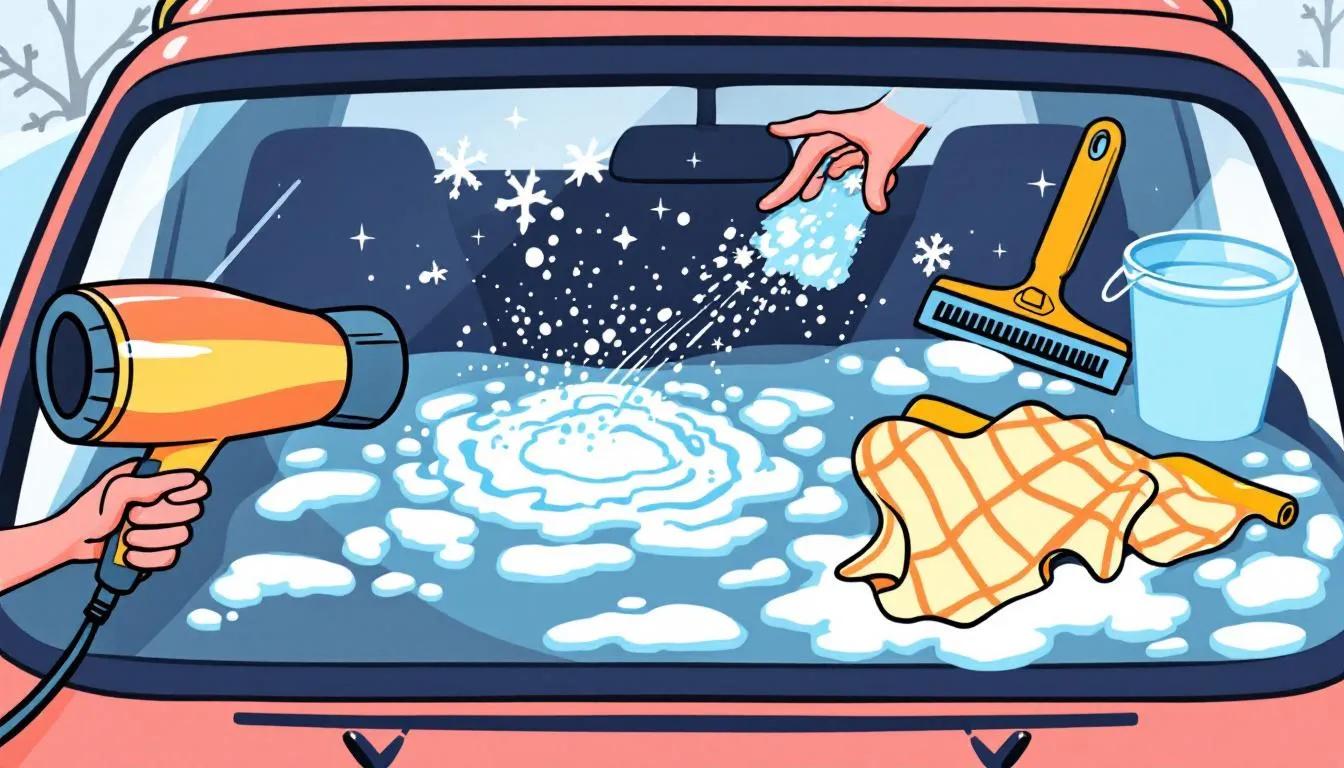
When you’re in a bind, household items can come to the rescue. Vinegar, for example, can be used to wipe your windshield to reduce fog. A simple mixture of vinegar and water can work wonders in keeping your windshield clear.
Baking soda is another household item that can help with a fogged up windshield by absorbing moisture in the air. Place it in a jar or sprinkle it on a cloth to wipe the windshield and keep it clear. Regularly cleaning your windshield with a glass cleaner can also help limit the buildup of residues that contribute to fogging.
A silicone-based spray on the inside of the windshield repels moisture, preventing fog from forming. Always use a lint-free cloth for cleaning the windshield. This helps avoid streaks. These household items offer practical, budget-friendly solutions to keep your windshield fog-free.
Understanding Built-In Defrost Features
Understanding how your car’s built-in defrost features work can make a significant difference in handling frosty mornings. Front defrosters use the vehicle’s ac system to distribute warm air, which helps remove frost and condensation from the windshield. Engaging the A/C automatically when the defroster is activated assists in drying the air inside the vehicle, enhancing the defrosting process.
Settings in many vehicles focus warm air directly on the windshield, speeding up defrosting and defogging. Rear defrosters utilize electric heating elements that heat the glass to melt frost and ice, providing a quicker solution than the front defroster.
Turning off the air recirculation mode can expedite the defrosting process, as it allows drier outside temperature air to enter the vehicle. Familiarizing yourself with these features ensures you can fully utilize them to keep your windshield clear and safe while using the defrost mode.
Summary
In summary, there are a variety of effective methods to defrost your windshield quickly and safely. From the trusty ice scraper to the innovative rubbing alcohol solution, each method has its own set of advantages. Utilizing your car’s built-in features, like the heater and defroster settings, can also make a significant impact.
We hope these tips will help you tackle frosty mornings with confidence and ease. Remember, preparing in advance and understanding how to use these techniques can save you time and keep you safe on the road. Stay warm and drive safely!
Frequently Asked Questions
What is the best way to defrost a windshield quickly?
To quickly defrost your windshield, try using an ice scraper or a rubbing alcohol solution—it works wonders! Just apply and watch the ice melt away.
Can I use hot water to defrost my windshield?
No, it’s not a good idea to use hot water on your windshield, as it can lead to cracks. Stick with lukewarm water instead to keep it safe.
How do I prevent my windshield from fogging up?
To prevent your windshield from fogging up, try using anti-fog solutions or baking soda, and make sure to avoid the air recirculation feature by keeping it on Fresh-Air mode. These simple tweaks can make a big difference in keeping your view clear!
Are there any household items that can help with defrosting?
Absolutely! You can use vinegar and baking soda to help with defrosting, such as keeping your windshield clear of frost. They’re handy household items to have around!
How do built-in defrosters work in a car?
Built-in defrosters work by using your car’s HVAC system to blow warm air on the front windshield and electric heating elements for the rear window to melt frost and ice. It’s a handy way to keep your visibility clear in cold weather!