Key Takeaways
I use simple household items like baking soda, dish soap, and an old toothbrush to clean white sneakers at home – no expensive kits needed.
Avoid bleach and hot water if you want your white sneakers to stay bright, not yellow.
Different materials need different care: leather sneakers get gentle hand cleaning, canvas sneakers can handle more scrubbing and even the washing machine.
Small, regular cleaning sessions work way better than waiting months and trying to fix deep stains all at once.
This guide also covers storage tips and drying methods that keep your white sneakers looking fresh for much longer.
My White Sneaker Story (Short Intro)
Back around 2018, I ruined my first pair of white sneakers by tossing them into a hot wash with a splash of bleach. I thought I was being smart. They came out yellow, stiff, and the soles started peeling away from the fabric. That pair went straight into the trash.
After that disaster, I started learning how to clean white sneakers the right way. I began experimenting on cheap canvas shoes and slowly worked my way up to nicer leather sneakers. Over time I found a routine that actually works – and it uses stuff most people already have at home.
This guide is based on what I actually do now, week after week, to keep my shoes looking close to new. No magic tricks, just simple methods that I’ve tested on my own pairs.
Quick Start: The Fastest Way I Clean White Sneakers
If your sneakers look bad right now and you just want an answer, do this first.
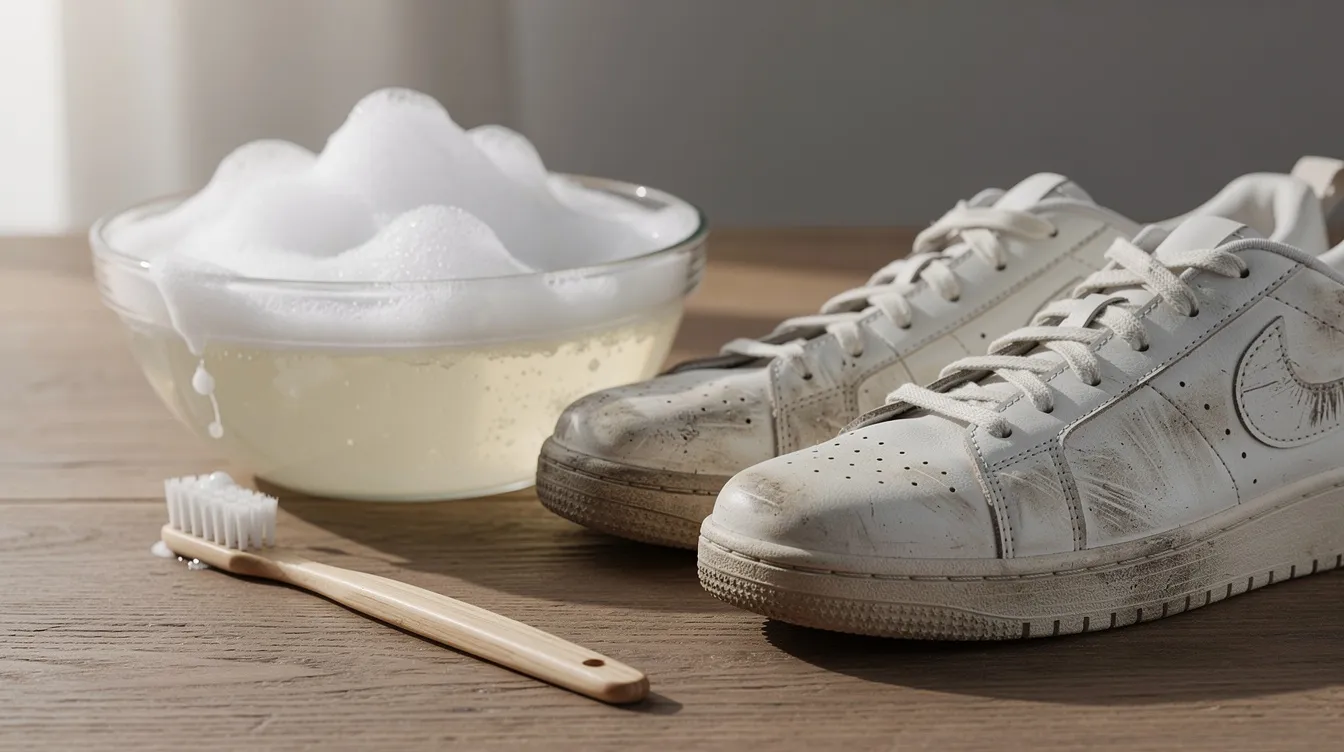
Grab an old toothbrush and dry-brush the soles and uppers to knock off loose dirt. Then mix warm water with a few drops of dish soap in a small bowl. Dish soap mixed with warm water is effective for routine sneaker cleaning, and it works on almost every material.
Dip the toothbrush in the soapy water, then scrub gently in small circles across the dirty spots. Wipe with a damp cloth to pull away the grime. Repeat until the shoe looks clean white again.
After that, let them air dry away from sun. Do not use a hair dryer or heater.
This method is safe for most white sneakers, but real leather shoes and suede need gentler care, which I cover below. Think of this basic routine as what keeps your sneakers presentable between deeper cleanings. Stains are easier to clean when addressed shortly after they occur, so try not to wait too long.
What I Gather Before I Clean Sneakers
Having everything laid out before I start makes cleaning faster and way less messy. Here is what I keep nearby:
A soft bristle brush or old toothbrush
A soft cloth or old T-shirt
A small bowl
Mild dish soap
Baking soda and white vinegar
A magic eraser (melamine sponge)
Paper towels
A mesh laundry bag (for machine washing days)
Optional: leather cleaner, suede brush, stain remover
Cleaning products should be chosen based on the specific material of sneakers. For leather sneakers, I reach for a gentle cleaner or mild soap. For canvas shoes, I use more water and baking soda freely. For suede, I only use a dry suede brush – suede sneakers should never be washed with water.
I always avoid harsh chemicals like bleach, strong bathroom cleaners, or pure rubbing alcohol. These can eat through glue and make white sneakers yellow over time. And I always check the care label inside the shoe before using any cleaner or starting machine washing.
Basic Prep: What I Do Before Any Cleaning
No matter what kind of shoes I’m working on – canvas sneakers, leather sneakers, or mixed-material pairs – I start the same way every time.
First, I remove laces and insoles. Pulling out the laces and insoles lets me reach seams, the tongue, and the spots where dirt hides. I usually soak the laces in warm water with a drop of laundry detergent while I work on the shoes.
Next, I clap the soles together over a trash can to knock off dry mud and gravel. Then I use a soft brush to lift dirt from seams, stitching, and any textured logos. A soft-bristle brush works perfectly here to remove dirt without scratching anything.
I stuff the sneakers with crumpled paper or clean rags. This helps them maintain shape and gives me a firm surface to scrub against.
At this stage I only wipe with a damp cloth to clear dust. I avoid soaking anything yet – too much water near glue lines this early is asking for trouble.
How I Clean White Leather Sneakers (By Hand)
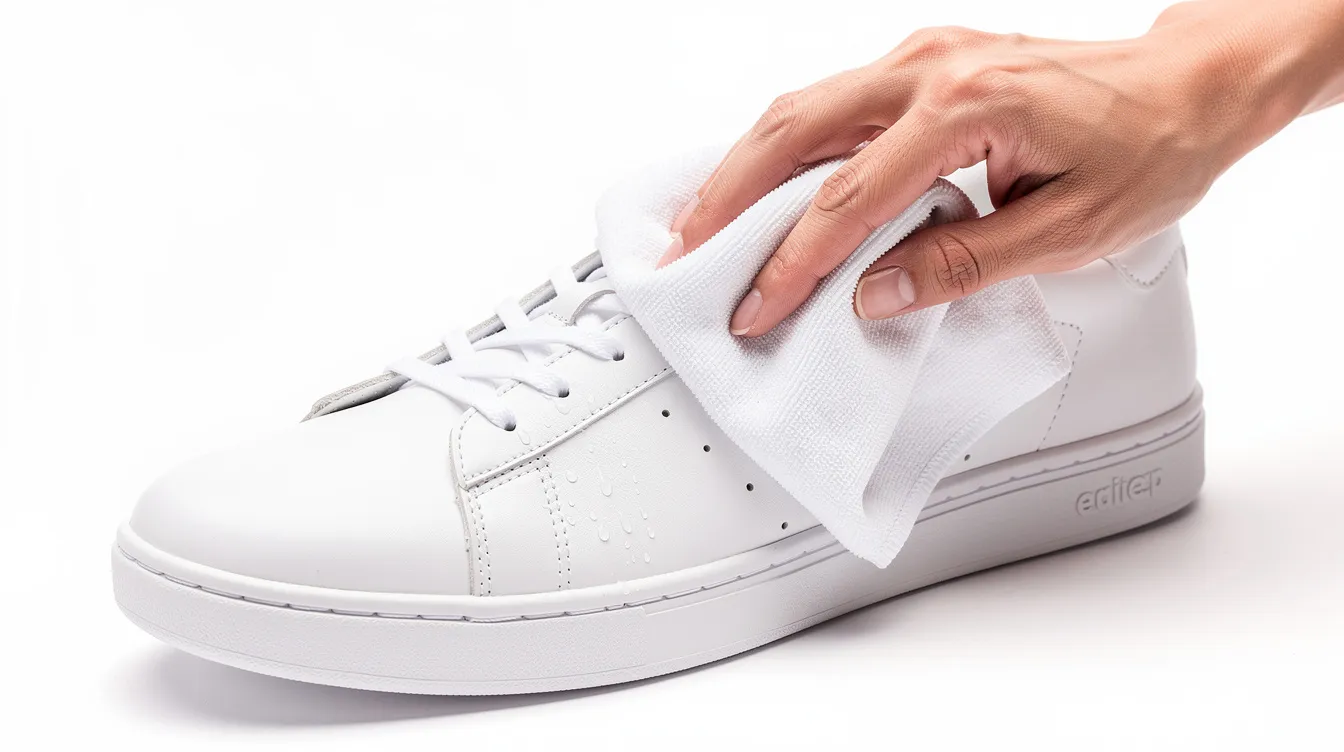
My nicer white leather sneakers need gentle cleaning because leather can crack, dry out, and lose its smooth finish if you’re too rough with it. Leather sneakers should be cleaned with minimal water and mild soap.
Here is my routine for leather shoes:
Mix warm water with a small amount of mild soap or leather cleaner.
Dip a soft cloth – not dripping, just slightly damp – and wipe in small sections.
Use a soft brush around seams and rubber edges where grime builds up. Use a soft-bristle brush for cleaning leather sneakers so you do not scratch the surface.
Avoid soaking the leather. Keep it just slightly damp, and squeeze out excess water from the cloth before each wipe.
For tough scuffs on the rubber sole, I make a paste of baking soda and water and scrub lightly with a toothbrush – but I keep that paste off the leather itself. Non-gel white toothpaste can also be used for spot cleaning leather areas when you do not have other products handy. A damp melamine sponge effectively cleans rubber midsoles of sneakers too.
I always wipe off soap residue with a clean damp cloth so nothing dries into the leather. Then I let the sneakers air dry at room temperature. Nike’s official shoe care guide warns against heat and direct sunlight for drying – both can warp leather and weaken glue. Avoid using hot water as it can weaken adhesives in sneakers.
Once they are fully dry, I sometimes rub in a small amount of leather conditioner to prevent cracking and help the surface stay smooth, especially on older pairs. Leather sneakers should never be machine-washed.
How I Clean White Canvas Sneakers and Other Fabric Shoes
My white canvas sneakers get dirty faster than leather, but they are more forgiving. Canvas sneakers can handle gentle scrubbing during cleaning, and I can use more water and baking soda without worrying as much.
Here is my go-to method to clean canvas sneakers and remove stains:
Mix one tablespoon of baking soda with one tablespoon of water and a splash of white vinegar to make a thick baking soda paste.
Spread the paste on dirty areas with an old toothbrush, then gently scrub in small circles. White vinegar combined with baking soda creates a paste for tough fabric stains that works surprisingly well.
Let it sit for about 15 minutes.
After the paste has done its job, I wipe or rinse carefully with clean cold water, making sure not to soak the inside completely so the glue does not loosen. Baking soda effectively whitens white sneakers, and you can scrub white canvas sneakers with a baking soda paste for stains that are really set in.
For very dirty canvas shoes, I repeat the paste step instead of jumping straight to the washer. Baking soda can also be mixed with hydrogen peroxide to remove heavy stains if vinegar alone is not cutting it. Atoms has a solid breakdown of how canvas tolerates these methods better than other materials.
I always air dry canvas sneakers to maintain their shape and color. Let them air dry naturally in the shade, because direct sunlight can fade the fabric and cause stubborn yellowing on rubber trim.
Machine Washing: When I Use the Washer and When I Don’t
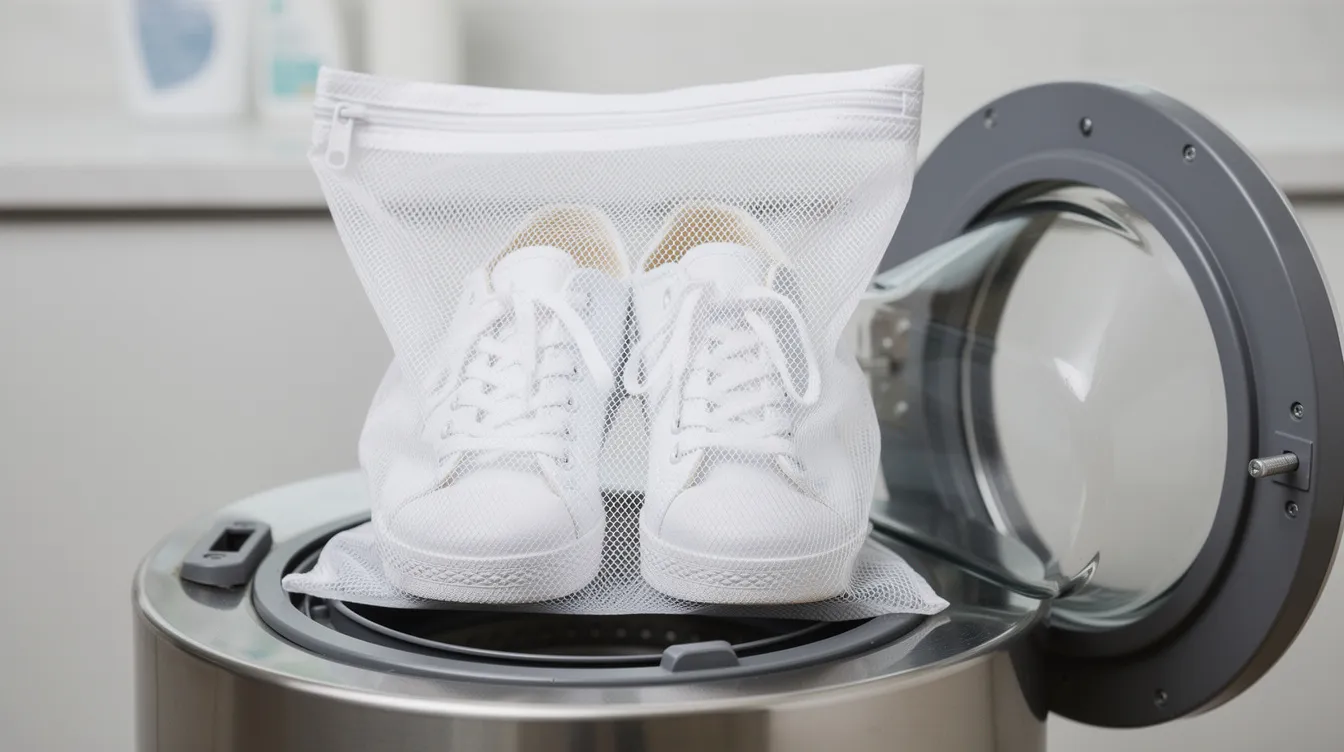
I will be honest – I did try machine washing white sneakers early on and learned the hard way that not every pair survives the washing machine. Canvas sneakers can be machine-washed safely, but leather, suede, and nubuck cannot.
Here are the types I will machine wash: cotton canvas sneakers, most polyester or mesh gym shoes, and cheap fabric sneakers.
My exact process:
Remove laces and insoles first.
Use a dry scrub brush to remove loose dirt.
Put the shoes and laces inside a mesh laundry bag.
Add a couple of old towels to the drum to balance the load.
Use cold water, a gentle cycle or delicate cycle, and a mild detergent. No bleach, ever.
Machine-wash canvas sneakers on a gentle cycle with cold water – that is the rule I follow every time. After the wash, I reshape the sneakers with paper towels stuffed inside, then let them air dry completely. I never put them in the dryer or near direct heat. Air-dry sneakers after machine-washing to prevent damage to glue and shape.
Machine washing is great for odor removal and deep cleaning inside the shoe, where odor causing bacteria like to hide. But I still rely on hand cleaning for surface stains, deep stains, and yellowing on the rubber soles.
How I Deal With Yellowing Soles and Stubborn Stains
The rubber around white sneakers loves to turn yellow, especially after a summer of wear or a bad bleach experiment. This stubborn yellowing happens because rubber and EVA polymers oxidize when exposed to UV light and heat, and the process speeds up with humidity.
Here is how I fight it:
Mix baking soda and white vinegar into a thick paste. A mixture of baking soda and vinegar removes yellowing from soles better than most store-bought products.
Apply only on the rubber soles with a toothbrush. Scrub gently.
Let it sit for 20 to 30 minutes, then wipe clean with a damp cloth.
For light scuffs on rubber edges, a magic eraser can help with light surface oxidation on sneakers – just press lightly so it does not crumble too fast. Toothpaste can clean small scuffs on rubber soles too, in a pinch.
Stubborn stains may require multiple applications of cleaning solutions. I let the sneakers air dry completely between rounds so I can see the real results before going again. Deep stains that have been sitting for months are the hardest to fix.
For prevention, I avoid direct sunlight when drying and I wipe soles quickly after walking through wet or dirty streets. Avoid sunlight and heat as much as possible during storage to slow down the yellowing process.
How I Keep My White Sneakers Looking Fresh Longer
I now spend a few minutes each week on my sneakers so I rarely need huge deep cleaning sessions. Regular light cleaning is more effective than infrequent deep cleaning – Good Housekeeping’s testing labs back this up, recommending small monthly cleans over big occasional ones.
My “after a few wears” routine:
Wipe sneakers with a damp cloth to catch fresh dirt.
Quick brush on the soles to remove dirt and gravel.
Check for new stains before they become set in stains that are much harder to fix later.
I use a protective spray on canvas sneakers and some leather sneakers. Applying a water- and stain-repellent spray can help protect sneakers from absorbing grime in the first place. I always test it on a small hidden spot first. Use a protective spray to repel moisture and dirt before you even wear them outside.
For odor control, I sprinkle a little baking soda inside the shoes overnight to kill odor causing bacteria, and I wash or replace insoles when they start to smell. Regular cleaning combined with regular maintenance and the right habits make a huge difference.
I also try to avoid wearing white sneakers in heavy rain, muddy paths, or dusty construction areas when I want to keep your white sneakers looking sharp for a specific event. Air-dry sneakers after cleaning to prevent damage no matter what method you used.
Storage Tips That Actually Make a Difference
I used to toss my white sneakers into a dark closet pile and then wonder why they came out looking bent and dingy. Not anymore.
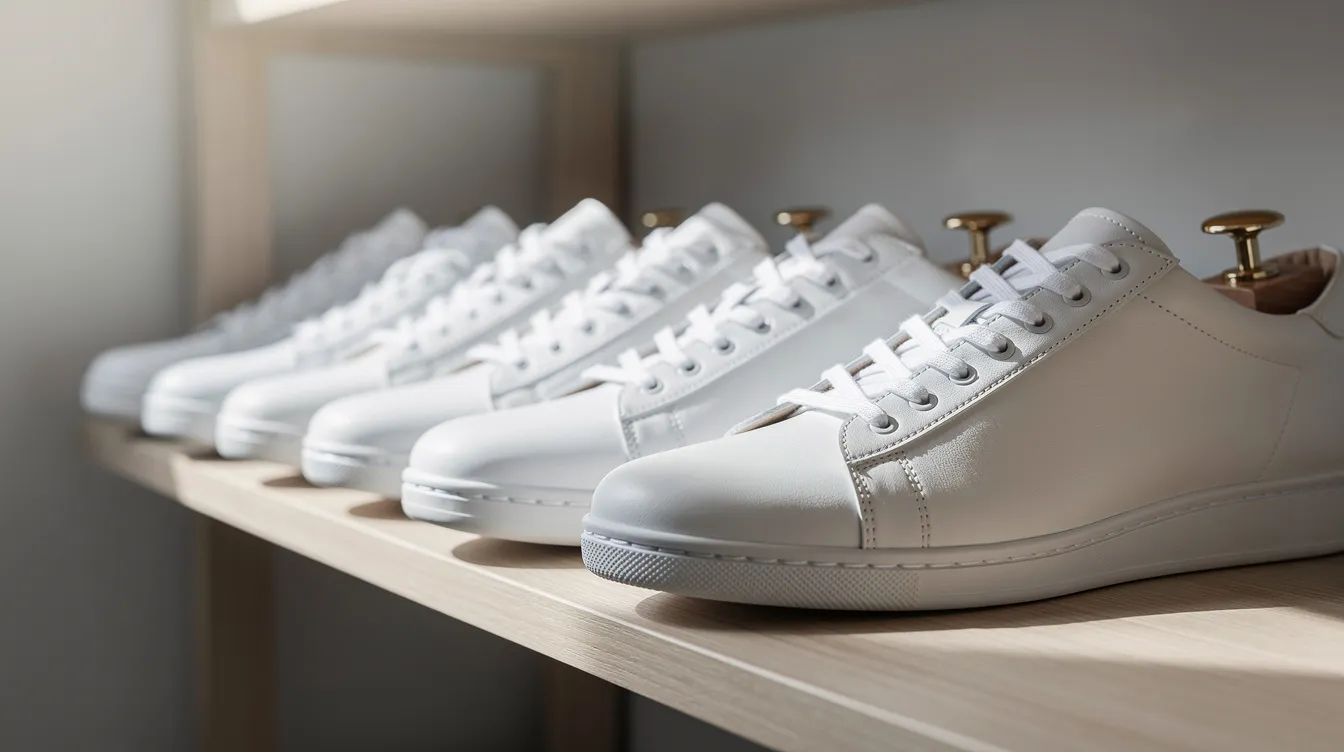
Now I store them in a cool, dry place, away from direct sunlight and heater vents. Store sneakers in a dry place to prevent scuffs and dust buildup. Sometimes I keep them in their original box with a small hole cut in the side for airflow.
I use shoe trees or stuff them with clean paper to maintain shape, especially for leather sneakers that crease easily. This keeps the toe box from collapsing and helps the shoes stay smooth over time.
I keep them away from damp basements and bathrooms to prevent mold and weird smells, and I never store them still slightly wet – that is a recipe for yellow spots and funky odors.
Rotate sneakers regularly to prevent premature wear. I switch between two or three pairs throughout the week so no single pair takes all the beating. These simple storage tips help keep all my white sneakers looking fresh much longer than they used to.
FAQ
Here are the questions I get asked most or had myself when I first started trying to clean white sneakers at home.
How often do I really need to clean white sneakers I wear every day?
When I wear a pair daily, I do a quick wipe every two to three wears and a deeper clean about once every three to four weeks – unless I step in mud or spill something obvious. Small, regular cleaning is always easier than trying to fix months of built-up grime. Even just wiping the rubber soles and uppers with a damp cloth after wearing them keeps things manageable.
Can I use baking soda on leather sneakers, or only on canvas?
I only use a paste of baking soda on the rubber parts of leather sneakers, not on the actual leather surface. The powder can dry out leather and leave a dull spot. If you really want to try it, mix a tiny amount of baking soda and water on a cotton swab and test it on a hidden area first. Personally, I prefer a leather cleaner or just mild soap and warm water for leather surfaces – it is safer and keeps the finish intact.
What do I do if my sneakers turned yellow after bleach?
I went through this myself. Bleach damage is hard to fully reverse because it destroys optical brighteners in synthetic fabrics and oxidizes rubber. I had some luck using a baking soda and white vinegar paste on the yellow rubber and scrubbing gently. On fabric areas, I keep the paste weaker and test a tiny spot first because the fabric might already be weakened. If the yellowing is very deep, sometimes the honest best fix is to stop using bleach, clean gently going forward, and accept a slightly off-white look rather than damaging them more. A stain remover designed for whites can sometimes help too.
Is it okay to put white sneakers in the dryer if I’m in a hurry?
No. I never put my white sneakers in the dryer now, even when I am running late. The heat can warp rubber soles, melt glue, and cause faster yellowing. Instead, I squeeze out excess water with a towel, stuff the shoes with paper towels, and place them near a fan or open window – but not in direct sunlight. They usually dry overnight this way.
How can I clean white sneakers while traveling with almost no supplies?
When I travel, I carry a travel-size toothbrush and use hotel soap or a mild face wash with warm water to spot clean stains in the bathroom sink. I use a small towel to blot extra water, then let the shoes air dry overnight away from heating vents. I sometimes pack a tiny zip bag of baking soda to sprinkle inside the shoes at night for odor removal on the road. It is not a perfect deep cleaning, but it keeps things under control until I get home.