
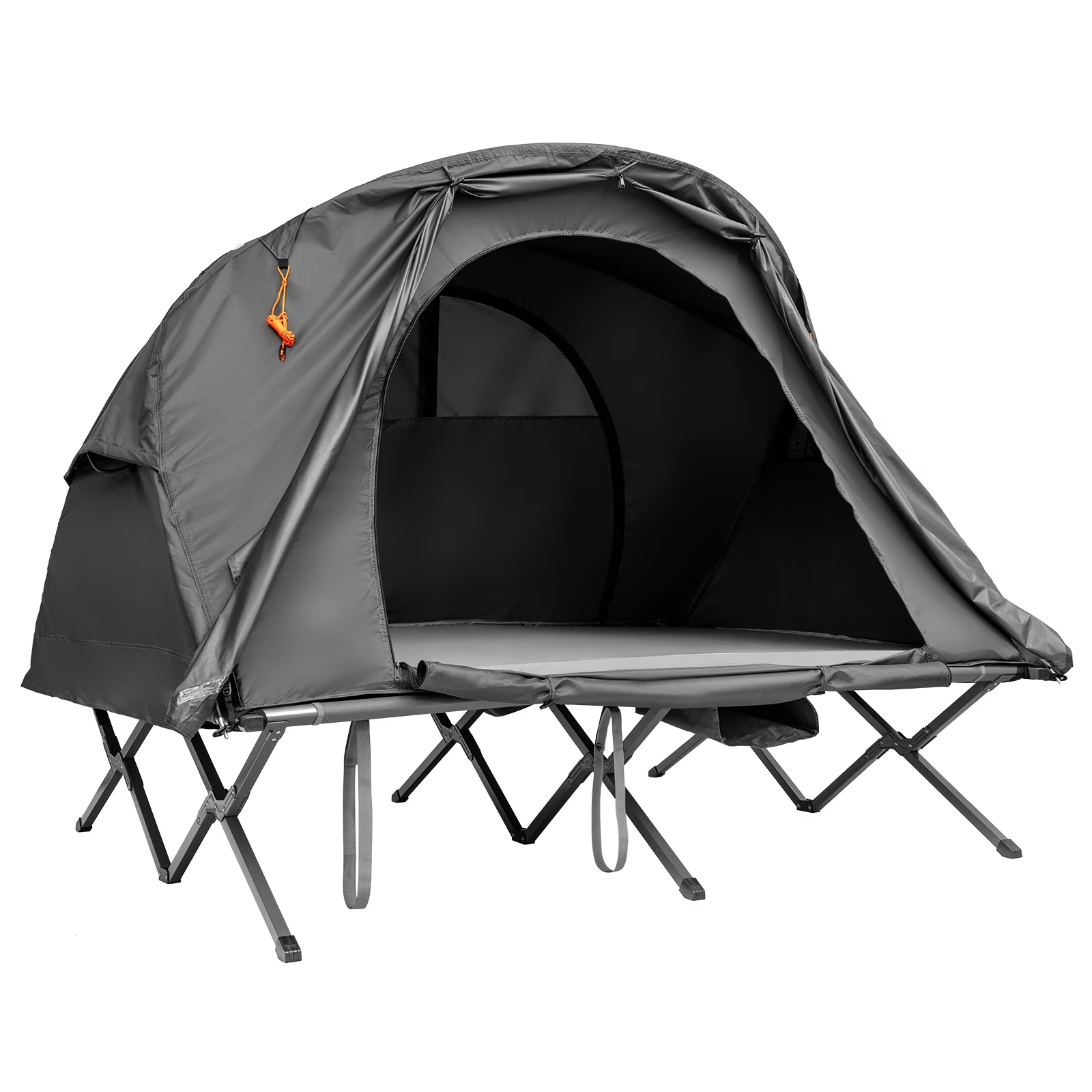
I like a tent cot because it keeps my bed and shelter in one simple camping setup. Instead of sleeping on wet ground, I can rest on a raised cot with a small tent around me. In this guide, I will show how I choose the right size, style, and features before I buy.
Quick answer: is a tent cot right for me?
A tent cot, also called a camping cot tent, is a raised camping cot with a tent built on top. I like it because it helps me sleep comfortably outdoors without setting up a bed and shelter as two separate pieces.
A tent cot is best for:
Car camping, where I can carry heavier camping gear in my vehicle.
Truck campers who have room in a truck bed for bulky outdoor gear.
Backyard campers who want an easy sleepout without lying on grass.
Campers who want an easy set sleeping system that goes up quickly.
My fast checks are:
I camp mostly from my car or truck → yes, a cot tent can work well.
I hate cold, damp ground and bugs at night → yes, tent cots help.
I want fast setup without many loose parts → yes, this category is suitable.
I go hiking or backpacking far from my vehicle → maybe no, because most models are bulky.
The rest of this guide will help me choose the right size, style, price, and features before I add one to my cart.
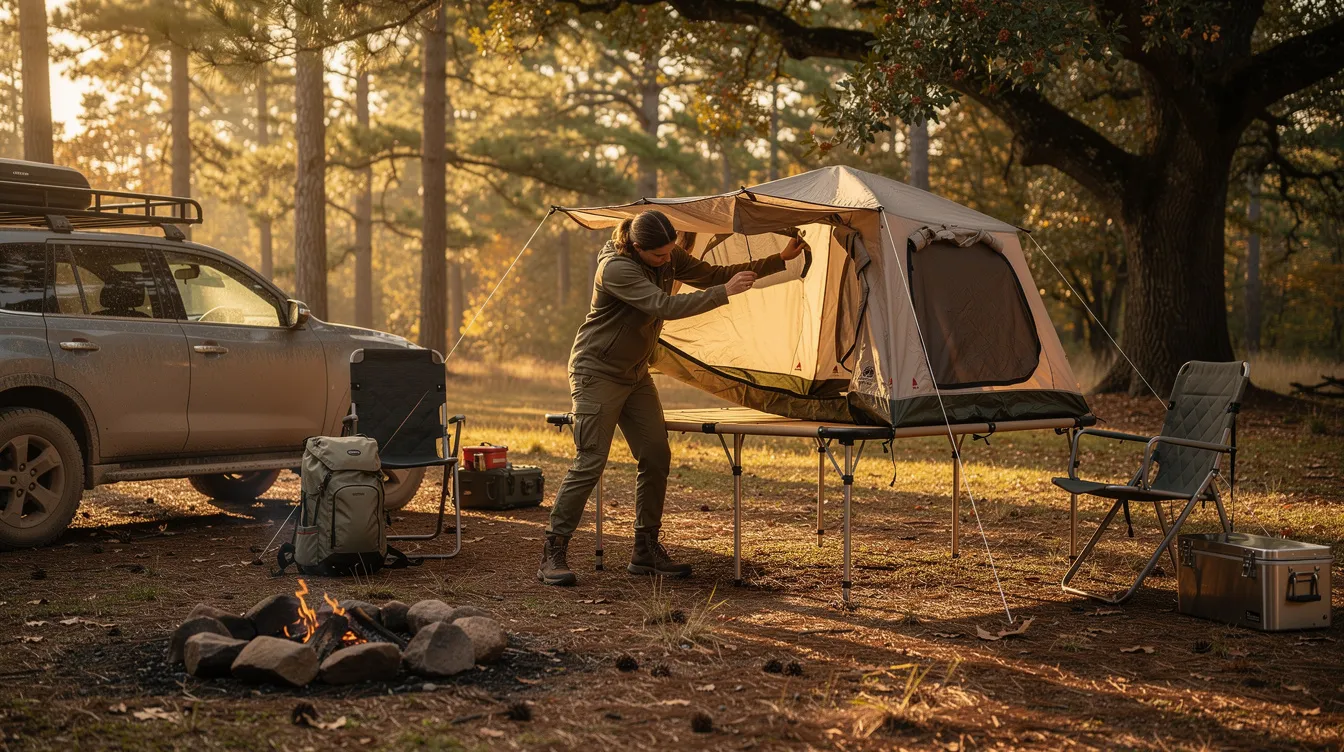
What is a tent cot and how is it different from a camping tent?
I see a tent cot as a camping cot with a small tent built on top. It gives me an elevated sleeping surface and overhead shelter in one compact system, which a traditional cot does not offer by itself.
Here is how I compare tent cots, normal camping cots, and a ground camping tent:
Elevation: A tent cot keeps me above rocks, mud, cold soil, and puddles. Many models sit about 10 to 15 inches off the ground.
Shelter: Tent cots generally offer better protection from the elements compared to traditional cots, as they include a built-in tent structure that shields users from rain and insects.
Comfort: Traditional cots are typically designed for comfort and stability, while tent cots prioritize portability and ease of setup, making them suitable for various camping scenarios.
Space needs: A normal camping tent still needs a pad or cot inside. A tent cot gives one footprint that includes both bed and shelter.
Warmth: Some people still add a sleeping pad on top of the cot tent for extra warmth, especially in cold weather, early spring, or late fall.
Common options include a single cot tent for solo camping, a double cot tent for two people, an oversize cot tent for more room, and kid-size models for family trips.
When selecting a tent cot, ensure that the dimensions fit your camping tent if you plan to place it inside a larger shelter, as many tents may not accommodate the full footprint of larger cot models.
How to choose a cot tent near you
When I shop for a cot tent near me, I check local stores and online brands. I look at space, weight, shelter coverage, and whether the item is in stock before I think about purchase, shipping, or delivery.
The main details I compare are:
Capacity: Most tent cots are designed to accommodate various capacities, with options available for one, two, or even four people, depending on the model.
Packed size: I check the bag size and how hard it is to pack.
Full length and width: I want enough room for my body, pillow, blanket, and small gear.
Frame height: A taller frame helps with puddles, but it can catch more wind.
Before I buy, I measure my vehicle trunk, truck bed, or gear closet. This saves me from getting a tent that looks great online but does not fit at home.
I also check how the cot tent fits real camping spots:
Small state park sites may have tight pads.
Forest sites may have roots, rocks, and uneven soil.
A backyard deck may be flat but short on space.
Search terms I use include “cot tent near me,” “camping cot tent with rainfly,” “easy set tent cot,” and “double tent cot.” When shopping online, I sort by category, stars, date reviewed, discounts, deals, and manufacturer details so I can compare options quickly.
Choosing between a one-piece tent cot and a tent cot combo
I have used both an all-in-one tent cot and a combo where the camping cot and camping tent are separate. Both work, but they fit different trips. The setup style of a tent cot can vary; integrated designs typically streamline setup, while separate tent cot combos may offer more modular packing options.
One-piece, integrated tent cots usually have:
A tent sewn, clipped, or designed to attach to the frame.
A flip-open or folding design.
Very fast and easy set assembly.
More weight in one big piece.
Tool-free assembly in many models.
Tent cots typically feature an integrated design that combines a cot and a tent, allowing for tool-free assembly and providing shelter from the elements.
Tent cot combos usually have:
A separate cot and tent.
More ways to pack and store each part.
Easier replacement if one part breaks.
A slower first setup while I learn the fit.
The connection style matters too. Pole sleeves can feel stronger in wind, clips are faster, and rainfly straps help the flysheet stay tight. I check how each part connects before I trust it in bad weather.
For example, I keep one integrated cot tent in the garage for surprise one-night trips. For longer trips, I may use a combo system with a lightweight cot and a different 3-season camping tent.
If I only need a camping cot, I also compare regular cot reviews. The best camping cot is the Kelty Lowdown for its comfort, ease of assembly, and value for the price, while the Helinox Cot Max Convertible is noted for luxury and the Helinox Lite for being ultralight.
Shelter coverage, weather protection, and easy setup
One October weekend, I camped through heavy rain and cold wind. That night taught me that shelter coverage is not a small detail.
The key shelter parts I check are:
A full rainfly that covers the roof and sides.
Taped seams so water does not leak through stitching.
A bathtub floor or raised base to block splash and pooling water.
No-see-um mesh for bugs.
Mesh windows for airflow.
Doors that zip smoothly from inside and outside.
Tent cots often include features such as mesh windows for ventilation, built-in storage pockets, and a roll-up flysheet for weather protection, enhancing comfort and convenience during camping.
Mesh panels and zip-up fabric panels work together. Mesh helps air move and keeps bugs out. Fabric panels add privacy and hold more warmth when the night gets cool.
Frame height also changes weather performance:
Higher frames keep me above puddles and rough ground.
Higher frames catch more wind.
Secure locking legs matter in a storm.
Wide feet help in soft soil.
For easy setup, I like folding scissor frames, shock-corded poles, and color-coded clips. After a little practice, a normal setup should take only a few minutes. Some models, like the Kamp-Rite Original Tent Cot, list a folded size near 35″×31″×6″, a weight near 24 lb, and a capacity near 300 lb.

Matching tent cot size and style to your camping plans
I do not pick the same tent cot for every trip. For car camping weekends, I may choose a bigger model. For a quick backyard night, I care more about simple setup and comfort.
Here is how I match size and style to the trip:
Campground camping: I choose more headroom, a wider sleeping area, and a comfortable layout. A double or oversize model can work if the campsite has space.
Overlanding or truck camping: I look for a rugged, durable frame, easy tie-down points, and a shape that packs well in a truck bed.
Backyard sleepovers: I may pick a bigger double tent cot with more headroom, especially if kids want a fun night outdoors.
Emergency or guest bed use: I choose a quiet frame, a small indoor footprint, and feet that will not scratch floors.
When choosing a tent cot, consider the capacity, configuration, and shelter coverage, as these factors significantly affect comfort and usability at camp.
I also check the total footprint, not just the sleep area. A single, double, or oversize model may need extra space for doors, ladder steps, shoes, and guy lines on the rainfly.
For family camping, I may use a double cot tent for adults and a smaller camping cot tent for kids. That keeps everyone off wet ground and makes the setting feel more organized.
Key comfort features: sleep area, height, and load capacity
Comfort is more than a soft bed. I also need enough room, solid support, and safe weight limits.
For sleep area, I check:
Length: My toes should not hit the end.
Width: My shoulders and hips need a little space.
Inside height: I want to sit up without rubbing the roof.
Storage: Small pockets help me keep a headlamp, phone, and keys close.
For sleeping height, I choose based on the environment. A low cot feels more stable in wind. A higher cot gives me space under the bed for gear, boots, or a dry bag.
Load capacity is one of the most important details. Most camping cots tested have a load capacity ranging from 250 to 300 lbs, which includes the weight of the user plus any gear such as sleeping bags and mattresses.
Here is my simple rule:
I add my body weight.
I add my sleeping bag, pad, and small gear.
I add a dog or extra blanket if I bring one.
Then I choose a model with at least 20% more capacity than that total.
When selecting a tent cot, prioritize factors such as portability, ease of assembly, and weight capacity.
For comfort upgrades, I like a thin foam pad, a softer pillow, or a small blanket under my hips. These small items usually still fit inside most cot tents and make the night feel much better.
Weight, packability, and transport
I have seen ultralight cot-and-tent combos under 7 lb, big single models near 24 or 25 lb, and some double or oversize models closer to 25 to 40 lb. Tent cots are generally heavier and bulkier than standard tents or sleeping pads, making them better suited for car camping.
Camping cots generally range in weight from 2 lbs 12 oz to nearly 25 lbs, with lighter options being more suitable for backpacking and heavier ones for car camping.
Here is how I think about transport:
Lighter cot tents work better for walk-in sites where I carry gear far from the car.
Heavier easy set frames are fine for drive-up camping.
Long, thin bags may slide beside chairs.
Short, wide bags may fit better in a truck bed.
Small hatchbacks need careful measuring before purchase.
The carry system matters. Shoulder straps, grab handles, and strong zippers make it easier to move the bag from garage to car to campsite.
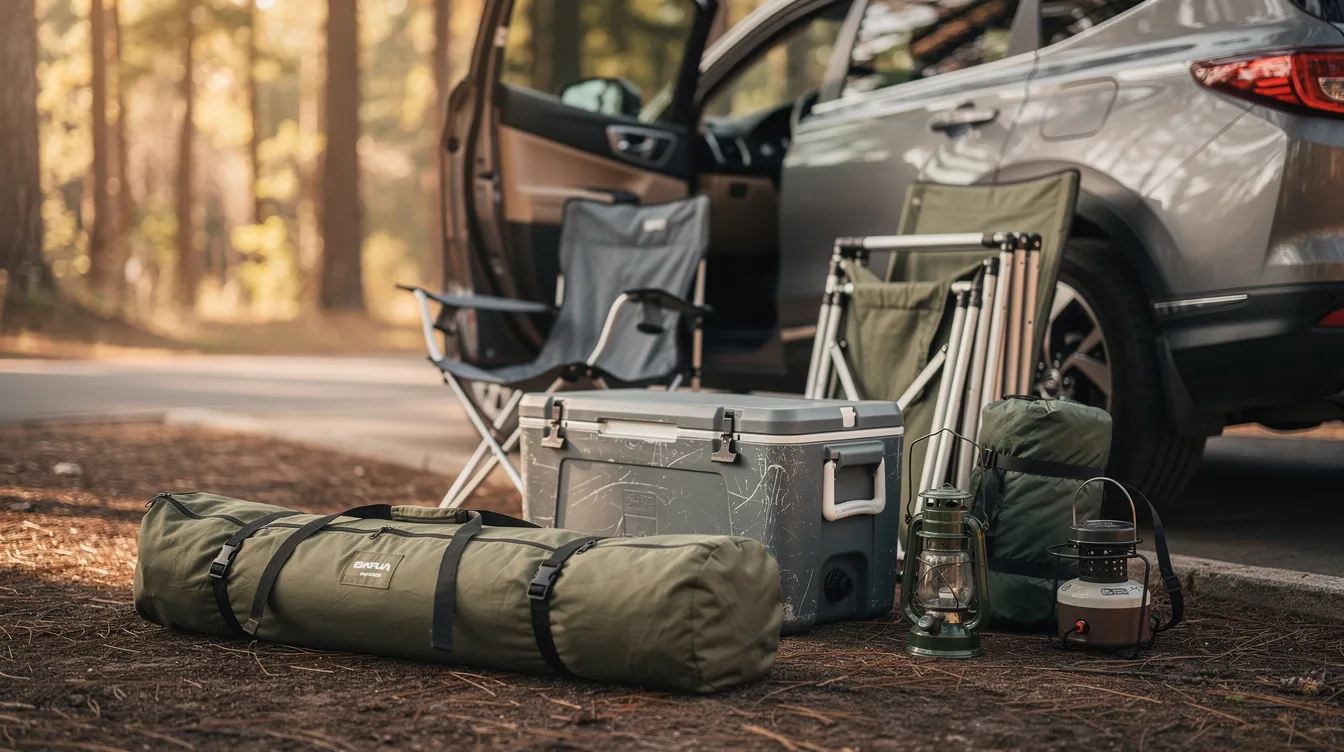
I also test my real pack at home. I load the packed tent cot with the cooler, stove, folding chairs, and other camping gear. That tells me if the full summer trip will fit, not just the cot by itself.
Tent cot care, cleaning, and storage
Good care helps a tent cot last for many seasons. It also keeps fabric from sagging and hinges from getting sticky.
My cleaning steps are simple:
Shake out sand, dirt, and pine needles.
Spot-clean the material with mild soap and a damp cloth.
Rinse the rainfly if it has mud or tree sap.
Dry everything fully before storage.
Durability in tent cots is enhanced by heavy-duty frames like aluminum or powder-coated steel and robust, tear-resistant fabrics. I look for these materials because they help with long-term durability.
For frame care, I check bolts, rivets, hinges, and locking pins once each season. If joints squeak or feel stiff, I use a light silicone spray made for moving parts.
I store the tent cot in its carry bag, indoors, in a cool and dry place. I do not stack heavy boxes on top because that can bend poles, stretch fabric, or damage mesh.
For repairs, I keep a small patch kit for rips in the tent body or mesh. If end caps, feet, or locking pins wear out, I contact the manufacturer for replacement parts.
FAQ: Common questions about tent cots
Here are the answers I give when other campers ask me about tent cots.
Can I use a tent cot on slightly uneven ground?
Yes, I can use one on slightly uneven ground, but I make sure every foot has firm contact. If the legs adjust, I level them carefully. If the slope feels unsafe, I move to a flatter spot.Are tent cots warm enough for spring and fall?
Sometimes they are not warm enough alone. Cold air moves under the cot and can pull heat away. In spring, fall, or any cold season, I add a sleeping pad or extra blanket under me.Are tent cots okay for kids and older campers?
Yes, but I choose low frame models when safety matters most. A small step can help older campers get in and out. For kids, I like lower kid-size models with stable legs.Can I use a cot tent as a spare bed indoors?
Yes, I can use it during power cuts or when guests stay over. I set it up inside a room, place a rug or cloth under the feet, and make sure there is enough ceiling space.What should I check before I buy one?
I check capacity, shelter coverage, packed dimensions, weight, material, and setup style. I also read reviewed notes, compare brands, and look for clear details before I purchase.Is a tent cot worth it?
For me, it is worth it when I want fast shelter, a raised bed, and fewer bugs. If I need a small pack for long hiking trips, I choose lighter options instead.
A tent cot is not the right tool for every trip, but it can make camping easier, cleaner, and more comfortable. If you mostly camp near your vehicle and want a fast bed-and-shelter system, compare a few models, check the dimensions, and choose the one you will actually enjoy using.