Key Takeaways
Shorter, tighter cuts like a buzz cut, crew cut, or taper fade almost always look better with thinning hair and a receding hairline than long, wispy styles that expose your scalp.
The best haircuts for balding depend on your specific pattern: front recession, thinning crown, or diffuse hair thinning across the top.
Pairing short hair with facial hair (a beard or even stubble) can balance a bald crown or thinning top and make your whole look feel intentional.
A clean shave is a strong, confident option once male pattern baldness is advanced—there’s no shame in embracing it.
Using matte products like styling powders and light styling clays can add volume without making hair look greasy or exposing the scalp.
My Story With Thinning Hair (And Why The Right Cut Matters)
I first noticed my hair was changing around age 30 in 2022. There were these little corners forming at my temples, and when my friend took a photo of me from behind at a barbecue, I saw a thinning crown I didn’t know I had. It felt like a punch to the gut.
For a while, I made every mistake in the book. I kept my hair long on top, thinking it would cover things up. I tried a weak comb over that fooled nobody. I used shiny hair gel that just made my scalp more visible under any light. Honestly, those bad choices made my hair thinning look ten times worse than it actually was. My confidence took a hit every time I looked in the mirror.
The turning point came in 2023 when I finally talked honestly with my barber. I told him exactly where I was losing hair, and he suggested a shorter cut that worked with my receding hairline instead of fighting it. That first shorter haircut changed everything for me. I suddenly looked like a guy who made a choice, not a guy desperately hiding something.
This article is about what I learned the hard way—plus a bunch of research I’ve done since. It’s not just theory from the internet. It’s real, lived experience mixed with practical tips that actually work.
By the end, you’ll know the best hairstyles for balding men for different patterns of hair loss. You’ll know how to talk to your barber without feeling awkward. And hopefully, you’ll feel a little more confident about your next trip to the chair.
Quick Start: How To Pick A Balding Hairstyle Today
If you’re short on time and just want to know what to do right now, here’s the quick version.
The first step is to figure out where your hair is actually thinning. Is it the front hairline pulling back? Is it the crown getting sparse? Or is it that overall see-through look across the whole top? Once you know your pattern, picking the right haircut becomes way easier.
Here are some fast picks based on your situation:
If you have a receding hairline: A short crew cut, high fade, or Caesar cut will work great. These styles embrace the hairline shape instead of trying to pretend it’s not there.
If you have a thinning crown or balding crown: Try a buzz cut, short crop with a low taper, or a very short top with a mid fade. Keeping the crown area short reduces contrast and makes bald spots less obvious.
If you have diffuse thinning all over: A textured crop or short messy quiff adds the illusion of fuller hair through choppy texture.
If hair loss is very advanced everywhere: The clean shave or zero-length buzz is usually the easiest, sharpest option. It looks intentional and confident.
Before you go to the barber, save 1-2 photos of each style you like on your phone. It’s so much easier to point at a picture than try to explain “short but not too short with that fade thing.”
Understanding Your Balding Pattern (So You Stop Fighting Your Hair)
Here’s something I wish someone had told me earlier: once you understand your hair loss pattern, choosing the best haircuts for balding men becomes ten times easier. You stop fighting your hair and start working with it.
There are three main patterns most balding men deal with:
Receding hairline: This is the M-shape that forms when your temples start pulling back. It’s often the first sign of male pattern baldness, and studies show many guys notice it around age 28.
Thinning crown or bald crown: This is the circular bald spot that develops at the back of your head. You usually don’t notice it yourself until someone takes a photo or you catch it in a mirror. It often shows up in photos around age 33 for a lot of men.
Diffuse hair thinning: This is when hair density drops pretty evenly across the whole top of your scalp. It creates that see-through look under bright light even though there’s no single bald spot.
Most men see some hair loss by age 50—research shows about 85% of us are affected by then. The timing and pattern just differ from person to person based on genetics and how your hair follicles respond to hormones like DHT.
The goal of any hairstyle for balding isn’t to hide everything perfectly. It’s to reduce contrast between thin and thick areas, add shape, and look deliberate. That’s the secret. When your cut looks like a choice, you look confident.
Choosing a haircut that complements your face shape can enhance your overall appearance and help balance out features, making it an important consideration for men with thinning hair. Men with round faces should consider haircuts that add height and volume on top, as this can help elongate the appearance of the face. Square faces benefit from haircuts that soften the angles, such as textured styles or those with rounded edges. For men with oval faces, most hairstyles work well, but they should avoid cuts that are too long or heavy on the sides.

Best Haircuts For Thinning On Top
This section is for guys whose main problem is thinning hair on the top or mid-scalp, but who still have some coverage up there. You’re not completely bald on top yet, but the scalp shines through under bright light.
Here’s the good news: shorter, tighter shapes reduce contrast between thin and thick patches. And creating texture on top using styling products adds volume and distracts from thinner spots. Recommended hairstyles for men with thinning hair or bald spots focus on minimizing contrast between the hair and scalp by keeping sides short and creating texture on top.
The cuts I’ll cover here are: buzz cut, buzz cut with beard, crew cut, short textured crop, Ivy League, high and tight, and skin fade with short top. All of these work great when your scalp is starting to show but you’re not ready to go fully bald yet.
Buzz Cut
The buzz cut is probably the most classic hairstyle for balding men. It’s the same very short length all over your head, usually with a #1 to #3 guard (that’s about 1/8 to 3/8 inch).
The buzz cut is a classic hairstyle for balding men as it reduces the contrast between thin and thick areas, creating a clean and intentional look. Studies from trichologists show it can reduce that visual contrast by about 70% compared to longer cuts. When everything is the same short length, there’s no obvious “thin area” versus “thick area” anymore.
If you can grow some facial hair, try pairing the buzz with light stubble. It adds structure to your face and balances out the very short head.
At-home tip: You can easily maintain a buzz yourself with clippers. Use the same guard all over once every 2-3 weeks to keep it fresh. A buzz cut is one of the easiest low-maintenance haircuts for balding men, as it requires minimal styling and helps reduce the contrast between thinning and thicker areas of hair.
Buzz Cut With Beard
Keeping your hair ultra-short while letting a beard grow (even a short beard) pulls the eye down and away from a thinning crown. It’s a simple trick that really works.
A beard or stubble can balance a closely cropped or shaved head, adding dimension and a rugged appearance. This style works especially well for men in their mid-30s and older. It’s forgiving for most face shapes because the beard adds definition to the jawline.
This is ideal for guys whose hair is very thin on top by 2024 or 2025 but who can grow a solid beard or heavy stubble.
Maintenance: Get a barbershop line-up every 3-4 weeks. Keep your beard neat around the cheeks and neck so it looks intentional, not scruffy.
Crew Cut
The crew cut is short hair with slightly more length at the front and tight, tapered sides. It’s one of the most versatile haircuts for balding men.
The crew cut is a versatile and low-maintenance haircut that keeps hair short on the sides and slightly longer on top, making it a practical choice for men with thinning hair. The extra length on the front can add a little volume without needing thick hair to pull it off.
This cut works great for men who started noticing hair thinning in their early 30s and still have some hair density at the front.
Simple styling: Blow-dry the front slightly upward for a few seconds. Then use a pea-sized amount of matte paste for soft hold. Keep it natural and avoid shiny products.
Short Textured Crop
A textured crop is a great choice for thinning hair because the short, messy top helps hide thin areas while giving the hair a fuller look. It’s a short, choppy cut with a messy, textured top and sometimes a small fringe.
The broken, piecey texture helps hide scalp because the uneven strands scatter light instead of reflecting it in one direction. It’s one of the best haircuts for balding men who don’t want a pure buzz.
Use matte clay or texture powder to keep shine down and create lift. This style should be cut with scissors on top and clippers on the sides, kept short and controlled.
Stylish hairstyles for balding men often prioritize shorter, textured looks that minimize contrast between hair and scalp.
Ivy League
The Ivy League haircut is a polished option that keeps the sides short while leaving a slightly longer top, which can help create a fuller appearance for thinning hair. It’s like a slightly longer crew cut, with enough front length to brush to the side or into a tiny quiff.
This is a good option if hair loss is mild (early receding hairline, light hair thinning) and you still want a professional look for office work. It reads as put-together and smart.
Keep the top under 2 inches to avoid floppy, see-through strands. Use a light, matte cream instead of wet hair gel. Heavy gels can clump hair together, exposing the scalp, and should be avoided by men with thinning hair.
High And Tight
The high and tight features very short or faded sides with a narrow, slightly longer strip on top. It’s inspired by military haircuts and looks sharp and intentional.
High-and-tight fades keep the sides and back extremely short, reducing focus on thinning top hair. Taking the sides very short makes thin hair on top look more like a style choice than a problem.
This works great for men whose hair loss is advanced on top but who still want some hair, not a clean shave yet. It pairs especially well with a beard or goatee to add presence to your face.
Skin Fade With Short Top
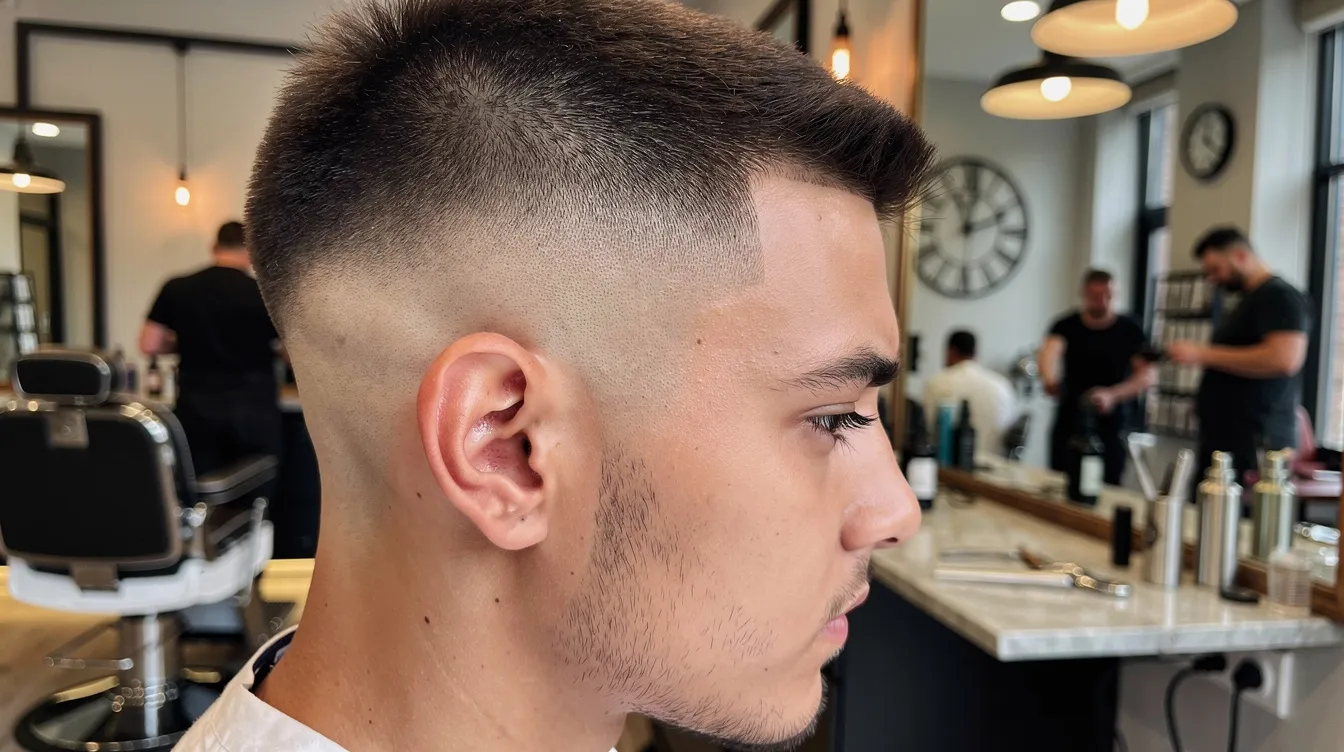
The skin fade is where the hair on the sides fades all the way down to bare skin, while the top stays short and shaped. It’s a modern haircut that’s gotten super popular in the last few years—barber surveys show about a 40% rise in “bald fade” requests since 2022.
This look draws attention to the outline and fade instead of the thinning hair on your crown. It works great for guys in their 20s and 30s with early male pattern baldness who still want something trendy.
Important: This style needs a skilled barber and regular visits every 2-3 weeks to stay sharp. A blurry, grown-out fade actually makes thinning hair look worse.
Best Haircuts For A Receding Hairline
A receding hairline (especially at the temples) can actually look strong with the right cut. The mistake is trying to hide it with long, thin bangs or obvious combovers that scream “I’m hiding my hair loss.”
The idea is to work with your new hairline shape, not pretend it’s still where it was at age 18. Here are the styles that do it best.
Short Crew Cut
This is a tighter, shorter version of the standard crew cut that keeps the front neat and compact. It’s great for receding corners.
The crew cut is a popular choice for men with a receding hairline, as it keeps the hair short on the sides and slightly longer on top, helping to disguise thinning areas. Shorter sides and a crisp hairline make a receding hairline look deliberate and masculine.
This cut suits men in their 30s-40s who want low maintenance but still need to look smart for work. Ask your barber for a short crew with a taper fade around the ears and neck.
Textured French Crop
The French crop has a short, textured top with a small, blunt fringe that lightly covers or softens the hairline. A short, textured fringe can help cover thinning areas while adding a youthful look, making it a suitable option for men with thinning hair.
A textured crop is an excellent option for a receding hairline, as it adds volume and movement, helping to disguise thinning areas while maintaining a modern look. This style works well when the temples are receding but there’s still some density at the very front.
Styling tip: Blow-dry your hair forward and use matte clay to define small, choppy pieces in the fringe.
Caesar Cut
The Caesar cut is a classic hairstyle that can help conceal a receding hairline by using a short, choppy fringe that covers the hairline and gives a neat appearance. It uses a short, straight fringe brushed forward, perfect for men who hate seeing a high forehead.
A Caesar cut is effective for covering a receding hairline, as it features a short fringe that can soften the appearance of thinning hair at the front. It’s a simple, low-fuss option for early to mid-stage receding hairline.
Combine it with a short beard if your jawline needs more definition. Get regular trims every 3-4 weeks to keep the fringe from becoming heavy or uneven.
High Fade Or Taper Fade
A high fade or taper fade removes weight around the temples and reduces the contrast next to a receding hairline. Fading the sides up close to the hairline can make the recession look less dramatic and more like a style choice.
Use a short, textured top with the fade, not long, slicked-back hair that exposes the scalp. Tell your barber you want a “high fade with short textured top” and show them a photo.
This dramatic fade style can really transform how a receding hairline looks.
Short Side Part
A neat, short side part (not a dramatic swoop) respects your current hairline instead of trying to pull hair across it. This is a classic hairstyle that works well in office settings where a traditional look is expected.
Keep the top under 2 inches and use a small amount of matte paste, brushed mostly back and a little to the side. Avoid hard parts shaved into very thin hair—they expose more scalp and make thinning temples more obvious.
Short Quiff
A modest, low quiff lifts the front slightly instead of building a big, tall pompadour. It can work well for creating lift and adding some personality to your style.
This only works if there’s still some front hair density. Otherwise, hair upward styling will expose more scalp than it hides. Use a blow-dryer for a few seconds and a fingertip of clay to keep it soft and touchable.
This is better suited to men in their late 20s-30s with early recession, not advanced balding.
Best Haircuts For A Thinning Crown Or Bald Crown
You know that moment when a friend shows you a photo and you see a thinning crown for the first time? It happened to me around age 32, and I was shocked. Turns out it’s super common by the mid-30s.
The goal with a balding crown is to blend it with surrounding hair and keep everything compact. Don’t build height directly over the bald spot—that never works. Keeping hair short is generally more flattering than attempting to cover bald spots with longer hair.
Short Crop With Low Fade
This is a tidy, short crop that keeps the crown area short and uses a low fade to soften the sides. Keeping the hair short around a thinning crown reduces contrast and avoids a “hole” in the back of your head.
Use matte product on top to add light texture while leaving the crown mostly alone. This is a good everyday cut for men who started noticing a bald crown around age 32-35.
Buzz Cut With Taper
A buzz with a gentle taper around the neck and ears looks softer than a flat buzz all over. The consistent length over the bald crown makes the spot less noticeable from the side and back.
This is one of the best haircuts for balding men who are tired of constantly checking the back of their head in photos. Revisit your barber every 2-3 weeks to keep the taper fresh.
Messy Textured Top
A short, messy top where the hair in front carries most of the texture while the crown stays shorter to blend into thinning areas. This works only if there’s still some hair at the crown; it won’t hide a fully bald spot.
Styling tip: Use texture powder or sea salt spray to rough up the front, not glossy hair gel that exposes scalp.
Very Short Top With Mid Fade
Keep the top very short (not quite a shave) combined with a mid fade up the sides for a clean, modern look. Short top length almost erases the visual difference between the bald crown and the rest of the scalp.
This is a smart halfway point between “still holding on” and “full clean shave.” It suits both straight and curly hair when hair thinning is advanced toward the back.
Salt-and-Pepper Buzz
Gray or salt-and-pepper hair combined with a buzz cut can look strong, masculine, and age-appropriate. Short gray stubble on the head often looks thicker and less patchy than longer gray strands because gray hair has a coarser texture.
This style works great for men over 40 whose thinning crown and graying hair are both obvious by 2026. Keep the scalp moisturized and use sunscreen—gray hair often comes with a more sun-sensitive scalp since there’s less melanin protection.
Full Clean Shave
The clean shave means taking everything down to skin with clippers plus a razor, especially when the crown is mostly bald. The clean shave often looks better than trying to cover up thinning hair, as it stops the struggle of hiding bald patches and presents a confident image.
Surveys show about 70% of men who finally shave their head say they wish they’d done it two years earlier. It ends the constant worry about bald spots.
Shaving your head completely can be a clean and low-maintenance solution for advanced hair loss, often seen as a strong and intentional look. A shaved head can be complemented with facial hair, such as a beard or stubble, to create a balanced and masculine appearance.
Practical tips: Shave with the grain, use a gentle shaving gel, and always apply SPF on the scalp. A shaved head exudes confidence and masculinity, making it a popular choice for men experiencing hair loss.

Fine Or Diffuse Thinning Hair: Styles That Add Density
Diffuse thinning is when your hair looks see-through across the top instead of just one bald spot. It’s common from the late 20s through your 40s and can feel frustrating because there’s no single area to “fix.”
The best hairstyles for this pattern focus on texture, matte finish, and shorter length to create the illusion of more hair. Avoiding very shiny products is key because they expose the scalp under bright light.
Textured Crop With Matte Clay
A short, choppy crop where the hair is cut into lots of small, uneven sections on top. The matte clay separates strands and makes fine hair and thinning hair look thicker without shine.
This is a go-to haircut for men who are not ready to buzz but hate how flat their hair sits. Using matte products like styling powders and light styling clays can add volume without making hair look greasy.
Quick morning routine: Blow-dry for 30-60 seconds, then work a small amount of clay from back to front with your fingers.
Short Messy Quiff
A small, messy lift at the front with short sides adds shape without needing lots of hair density. This suits early diffuse thinning where the front still has some strength.
Use sea salt spray for lift and finish with a little texture powder for hold instead of heavy wax. Keep the quiff low and controlled to avoid exposing the scalp.
Layered Short Cut
A scissor cut with short layers adds movement all over rather than one solid block of hair. Layers help thin hair avoid sitting flat and showing every patch of scalp.
The butch cut is a low-maintenance hairstyle that keeps hair at a uniform length, making it ideal for men with thinning hair as it helps to hide volume loss. This can be a great alternative for guys who like a softer, more “haircut” feel and dislike pure clipper cuts.
Use a light, matte cream and avoid combs that create sharp parts.
Side-Swept Crop
A short crop with the front brushed gently to one side—not a heavy side combover. This works if the hairline is mostly intact but hair density has gone down across the top.
Styling tip: Blow-dry in the direction you want the hair to fall, then finish with a fingerful of paste, keeping the part soft and natural. Don’t pull hair too far over, as that starts to look like a desperate combover.
Taper Fade With Natural Texture
A classic taper fade on the sides and back with a short, lightly textured top. Keeping the edges neat and the top soft makes diffuse thinning look controlled instead of messy.
This is a good “all-rounder” haircut for balding men who want something safe and modern. It blends well with a bit of stubble or a short beard for added scalp coverage around the jawline.
Curly Or Wavy Hair That’s Thinning: Make The Texture Work For You
Here’s good news if you have curls or waves: curly hair can hide thinning hair very well. Research suggests curls hide about 40% more scalp when kept short compared to straight hair at the same length. But only if the shape is tight and controlled.
Letting thinning curly hair grow long often leads to frizz and patchy areas around the thinning crown. Keep sides short and top compact to avoid the “mushroom” effect on thinning curls.
Short Curly Crop
A tight crop where curls are trimmed short so they clump into small, dense groups. Short curls naturally cast shadows on the scalp and hide mild thinning better than you’d expect.
Use a curl cream with light hold, not greasy hair gel, to keep curls defined. This is great for men with early thinning who had big curls in their teens and 20s.
Curly Caesar
A Caesar-style cut adapted for curls, with curls brushed slightly forward to soften a receding hairline. This works when the front curl density is still decent but the temples are moving back.
Get regular trims to avoid the front becoming too heavy or stringy. Use a matte curl cream or foam to control frizz without shine.
Curly Fade
Tight faded sides with a small, textured patch of curls on top. The contrast between the fade and curls on top pulls attention away from patchy thinning areas.
This is a cool, modern look for men in their 20s and 30s dealing with early hair loss. Keep the top under 2 inches to avoid thin, see-through curls.
Loose Textured Wavy Crop
A short, wavy crop where the natural texture is encouraged with a bit of sea salt spray. The wave pattern adds volume and breaks up scalp visibility for men with mild thinning.
Let hair air-dry or diffuse on low heat to protect fragile strands. This suits men who had thick wavy hair as teens but now see hair thinning on top in their 30s or 40s.
Short Curly Fringe
A haircut that leaves a small curtain of curls at the front while keeping the rest short and tidy. The curly fringe can soften a high forehead if there’s still enough density at the front.
This doesn’t work when the entire front line is very sparse or patchy. Use a light hold product to keep curls from separating and showing too much skin.
Older And Thinning: Age-Appropriate Cuts That Still Look Sharp
Hair loss plus gray hair after 40 can actually look very distinguished with the right cut. The goal is believable, clean hairstyles that match your age and lifestyle—not pretending to have a 20-year-old’s hairline.
By 2025, my temples and crown were both thin, and I realized it was time to accept what was happening instead of fighting it. That shift made all the difference.
Silver Buzz Cut
A neat buzz on salt-and-pepper or gray hair looks intentional and low maintenance. Shorter gray hair usually looks thicker than longer gray hair that splits and frizzes.
This style suits men over 45 dealing with clear hair thinning and graying at the same time. Trim every 2-3 weeks and use a gentle shampoo with hydrating conditioner to avoid drying the scalp.
Short Side Part
A conservative, short side-parted cut where the part is soft, not shaved in. It suits men whose hairline has matured but who still have enough density on top to comb.
This works great for office workers or professionals who need a classic style in their 40s-60s. Use matte styling cream so the part doesn’t shine and show scalp.
Ivy League With Taper
A slightly longer top with a gentle taper on the sides, suited for mild hair loss and early gray. It’s a safe, smart choice for men around 40-55 who want polish without pretending to have full hair.
Keep the top short enough that the scalp doesn’t flash under bright office lights. Trim every 4-5 weeks to maintain shape.
Close Crop
A uniform length, very short cut—a tiny bit longer than a buzz but shorter than a crew cut. A close crop keeps everything compact and stops hair from sticking up in thin patches.
This works great when hair loss is moderate all over and styling effort feels like a daily fight. You can do it at home with a #2 guard all over for a quick weekend reset.
Clean Shave With Silver Beard
The strong, balanced look of a shaved head plus a gray or salt-and-pepper beard. This is a bold step for advanced significant hair loss, especially when both crown and hairline are mostly gone.
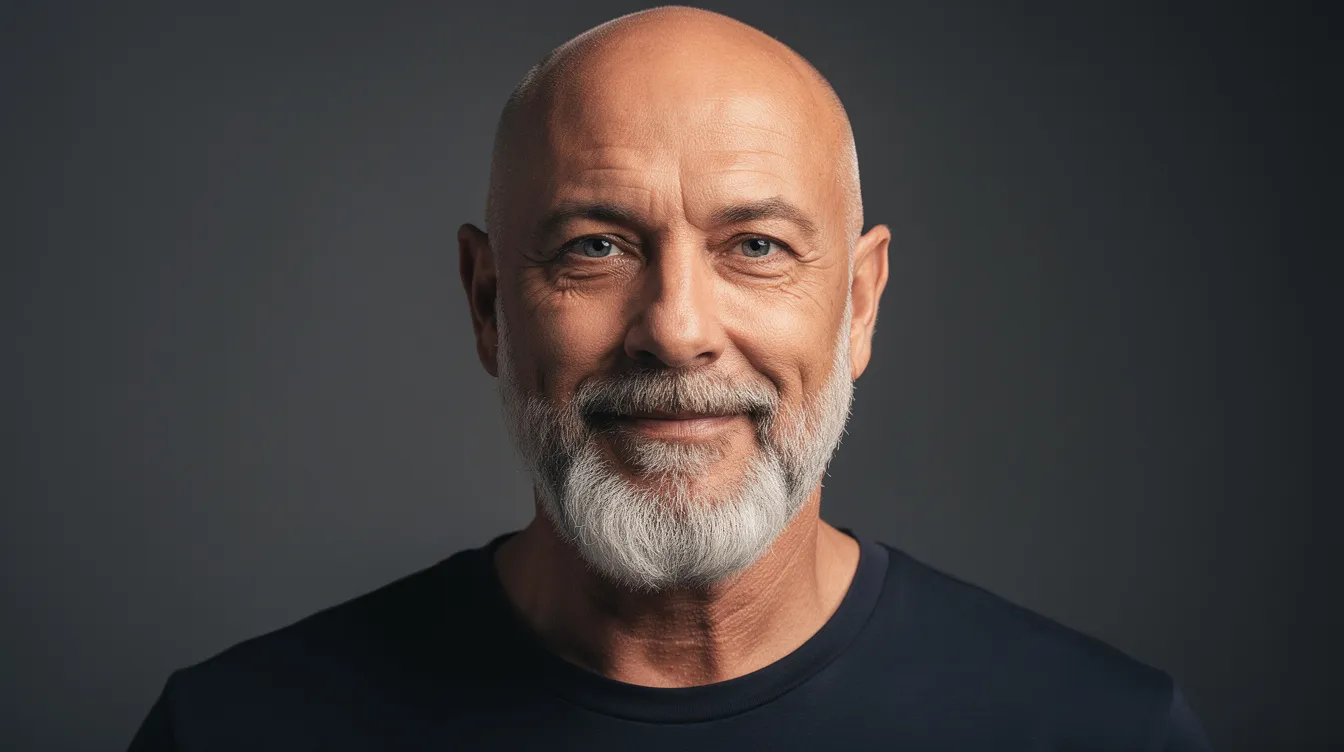
Keep up with regular beard grooming so the style doesn’t look unkempt. Many men who finally shave in their 50s say it feels freeing and easier than constant cover-ups as part of the aging process.
Facial Hair: Your Secret Weapon When You’re Balding
Facial hair can balance a balding top by adding density lower on your face. It’s one of the simplest tricks to make any balding hairstyle look more intentional.
Think about combinations like: buzz cut with beard, clean shave with stubble, high fade with full beard. Each of these shifts visual weight away from your head and toward your jaw.
I’d encourage you to experiment with 2-4 weeks of growth to see how your jawline looks with stubble or a short beard. You might be surprised—even patchy facial hair can sometimes work as light stubble paired with a very short haircut.
Keep your cheek and neck lines neat so the style looks intentional, not lazy. A quick trim of facial features around the beard edges once a week makes a big difference.
What To Tell Your Barber When Your Hair Is Thinning
Saying “just tidy it up” got me some of my worst haircuts when my hair started thinning around 2021. I learned the hard way that you need to be specific.
Be honest about your hair loss. Tell your barber exactly where the thinning is worst—whether that’s thinning temples, crown, or all over. Explain your goal: less contrast, more control, looking intentional. Don’t say you want to “hide everything” because that leads to bad suggestions.
Here’s what to communicate:
Mention where the thinning areas are worst
Say you want short hair on the sides
Ask for texture on top (not slick or flat)
Avoid long, floppy lengths
Bring 2-3 photos of haircuts for balding men that match your pattern
Before you leave, ask your barber which clipper guards they used. That way you can maintain the length at home between visits and keep your head shape looking right.
Styling Tips For Thinning Hair (That Actually Help)
Even with the best hairstyles for balding men, the right products and techniques make a big difference.
Use matte products. Styling cream with a matte finish, clay, paste, or powder work way better than shiny products. Matte products diffuse light while glossy gels reflect about 80% of light—exposing every bit of scalp underneath.
Blow-dry for lift. Even 30-60 seconds of blow-drying adds lift and direction before you add product. This is especially helpful for creating lift in fine, flat hair.
Avoid heavy products. Very heavy, greasy products separate strands and highlight hair loss. Use a tiny bit of product—a fingertip is usually enough.
Finger-style, don’t over-brush. Quick finger styling creates natural texture. Combs and brushes often create sharp parts that expose more scalp.
Shorter hair usually looks better on balding men because long, weak, thinning hair tends to advertise the problem, while short hair controls it. Keep it simple and avoid sitting flat styles that show every thin spot.
Maintaining A Balding Hairstyle
Shorter, balding-friendly cuts usually need more frequent trims, not fewer. Here’s a rough schedule:
Style | Trim Frequency |
|---|---|
Buzz cut | Every 2-3 weeks |
Skin fade | Every 2-3 weeks |
Textured crop | Every 4-5 weeks |
Ivy League | Every 4-5 weeks |
Crew cut | Every 3-4 weeks |
Use a gentle shampoo and light hydrating conditioner 2-3 times a week to avoid drying already fragile hair. Over-washing can make thin hair look even more sparse.
Protect your thinning crown or completely bald head from the sun with SPF 30+ or a cap, especially during summer. UV rays penetrate thin hair about twice as easily as thick hair because of reduced blood flow and melanin.
Keep ears, neck, and beard lines tidy between cuts. It makes the whole balding hairstyle look cleaner even when your top is slightly grown out.
When To Consider Going Fully Bald
There was a moment around 2024 when I realized my balding crown and receding hairline were winning. I looked at myself in the bathroom and thought: maybe it’s time for a clean shave.
Here are signs it might be time for you too:
Large bald crown plus weak front density
Hair looking thin even when wet (experiencing significant hair loss)
Spending too long trying to style around hair loss every morning
Medium length hair that just sits flat and looks patchy
The emotional side is real. There’s fear of change, worrying how friends and partners will react. But there’s also relief—not fighting hair thinning every single day anymore.
I suggest trying a very short buzz cut first (like a #1 guard) for a few weeks as a “test drive” before going full razor. You’ll get used to seeing yourself with way less hair, and most guys find their head shape looks totally fine.
Going bald can look strong and stylish, especially with stubble or a beard and good grooming. A hair system or hair transplant is an option for some, but for many men, simply losing hair and embracing it feels more freeing.
Hairstyles To Avoid When You’re Balding
Some styles make hair loss look worse, even if they seem like they offer more “coverage.” Here are the mistakes to avoid:
Hair long on top: Long hair splits apart under gravity, exposing 30-50% more scalp per inch of length. Swap it for a short textured crop or buzz.
Heavy slicked-back styles: Slicking hair back exposes the crown completely and creates shine that highlights every thin spot. Try a textured top with matte product instead.
See-through combovers: About 70% of combovers are obvious to everyone except the guy wearing one. A Caesar cut or short crop looks much better.
Tall pompadours on weak hair: Building height when you don’t have the hair density to support it just collapses and exposes scalp. Keep any quiff low and modest.
Sharp hard parts on thin hair: Shaving a line into thin hair creates a gap that shows more skin. Use soft, finger-combed parts instead.
These mistakes are easy to make—I made most of them myself before learning what actually works with my receding hairline and thinning crown.
Living With Hair Loss: Confidence Matters More Than The Cut
At the end of the day, this stuff is about more than just haircuts. It’s about how you feel when you look in the mirror.
Accepting my thinning hair around 2023 actually helped me feel better in photos before I even changed my hairstyle. Once I stopped seeing it as a problem to hide and started seeing it as just… my head… everything felt lighter.
People notice overall confidence and grooming more than every single hair. A clean shave, trimmed beard, tidy eyebrows—these things matter more than whether you have slightly longer hair on top.
Experiment. Try a new haircut for balding men every few months until something feels like “you.” Screenshot 2-3 styles from this article, book a barber visit this week, and see what happens.
The best hairstyle for balding is the one that makes you feel like yourself.
FAQ
Here are answers to some questions I get asked a lot about balding hairstyles.
How often should I get my hair cut if it’s thinning?
Shorter, balding-friendly cuts usually look best with trims every 2-3 weeks for buzz cuts and fades, and 4-5 weeks for textured crops or Ivy League styles. Leaving it too long lets thinning areas grow out, flop over, and make hair loss more obvious. I suggest booking your next appointment before leaving the barbershop so you stay on schedule.
Can hair fibers or thickening sprays help with a thinning crown?
Hair fibers and thickening sprays cling to existing hairs to make them look fuller and darker. They can work well for mild to moderate hair thinning, especially on the crown, but they’re temporary and wash out. Test them on a day off first to learn how much to use and make sure the color matches your hair. They won’t work on completely bald areas with no hair to cling to.
How do I know if I’ll look good with a shaved head?
Try a very short buzz cut first (like a #1 guard) for 2-3 weeks to see your head shape and get used to seeing less hair. Most men with average head shapes look fine bald, especially if they keep a little facial hair and stay reasonably fit. Ask a trusted friend or your barber for an honest opinion before going fully smooth with a razor.
Should I grow my hair long to hide a receding hairline?
No—hair long on top almost always makes thinning hair and a receding hairline look worse, not better. Long strands split and separate, showing more scalp than shorter hair. Shorter, controlled cuts like a crew cut, textured crop, or taper fade shape the hairline instead of trying to cover it. Even cutting off an inch or two of weak length can make hair instantly look thicker.
Is it too late to change my hairstyle if I’m already very bald on top?
It’s never too late. Many men switch to a buzz cut or clean shave in their 40s, 50s, or 60s and feel better after. Start with a tight buzz cut and, if you like it, move to a full clean shave later. Changing your cut and grooming your beard (if you have one) can make you look sharper, even if the amount of hair on top doesn’t change. Some men also explore scalp micropigmentation as an option to create the look of hair density.